I ended up coming back to this post and rewriting it.
Part of that is because it was one of the first things I published before I switched to recording notes and talking things out. This was written back when I was still trying to shape everything like a traditional blog post. Short sentences. Clean structure. The kind of thing you get when you run ideas through tools like Hemingway Editor.
After writing about ditching that approach, it felt strange leaving this one untouched. You can feel the difference when you read it.
The original idea came from messing around with AI image generation, specifically Artspace.ai. I listen to music a lot, and there are times when lyrics paint a scene in my head. You hear a song and you almost see it playing out. That’s what got me thinking. What if I took song lyrics and used them as the starting point for an image prompt?
The idea was simple. Feed ChatGPT the lyrics to a song and have it return a prompt I could use inside an AI image generator.
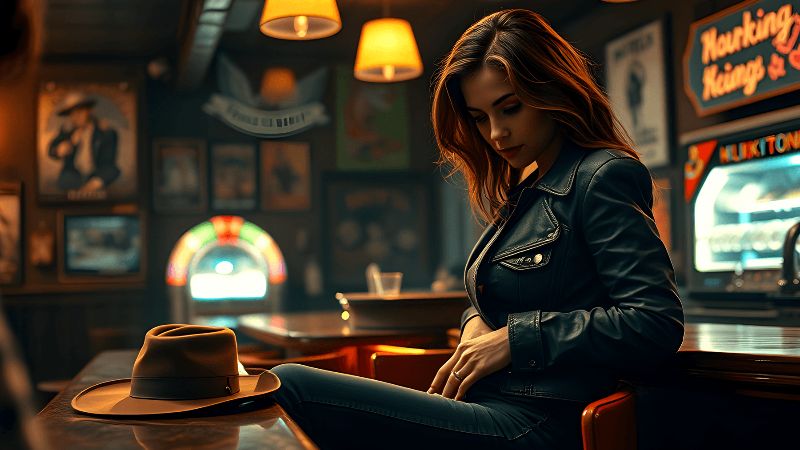
The image above is an example of what that produced. I used the lyrics from “Cheatin’ Songs” by Midland. Overall, I was pretty happy with the result. This was done last year, and the software has changed a lot since then, but at the time it felt like a solid experiment.
One thing I ran into pretty quickly was that you have to guide ChatGPT away from being too literal. Lyrics jump around. In that song alone, the woman is described wearing tight jeans in one line and a little black dress in another. Left alone, the prompt would try to combine everything into a single image. Tight jeans and a black dress at the same time. To fix that, I had to be more intentional, sometimes splitting things into separate prompts or focusing on a single moment instead of the whole song.
The same thing happened with backgrounds. The subject would look right, but the scene would feel off. I remember one version that had two jukeboxes sitting next to each other in a bar. Technically possible, but not believable. That meant refining the prompt again. Fewer elements. Clearer setting. More restraint.
That back-and-forth ended up being the interesting part. Learning how small changes in wording shaped the final image.
These days, ChatGPT can handle both sides of this. Prompt creation and image generation are built in now. You don’t need a separate image tool if you don’t want one. Things move fast. What looked impressive a year ago already feels dated. A year from now, it’ll probably look prehistoric.
None of this was meant to be serious work. It was just something fun to explore.
If you want to try it yourself, grab the lyrics to a song you know well. Something familiar. Even something a little cheesy. “I Want It That Way” by the Backstreet Boys is a good example. Drop the lyrics in and see what kind of scene comes back.
At worst, you get something strange. At best, you end up with an image that looks a lot like what you were already seeing in your head.